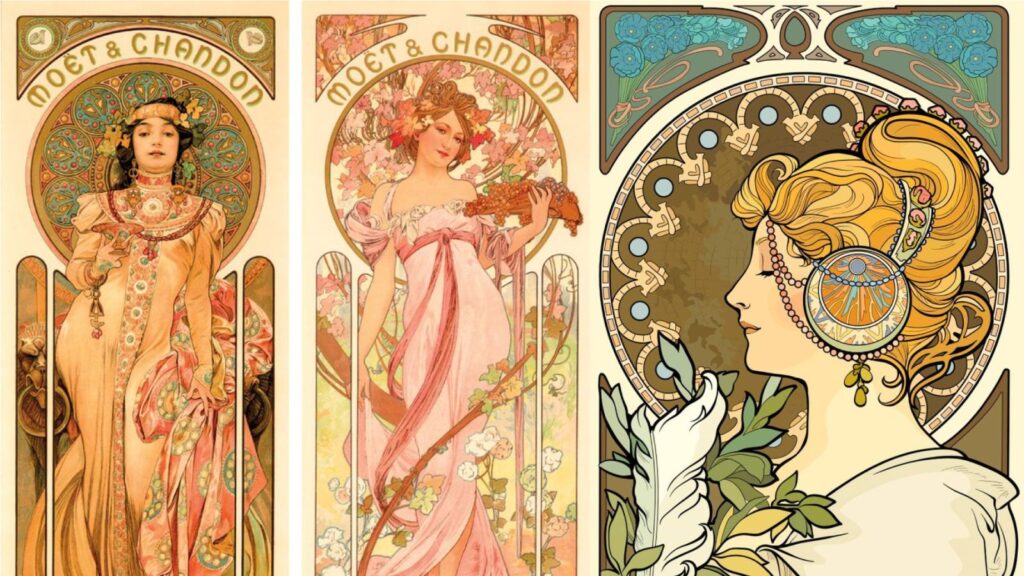

Art Nouveau isn’t just an art style—it’s a revolution wrapped in flowing lines, intricate patterns, and nature-inspired beauty. Emerging as a response to industrialization, this artistic movement sought to bring handcrafted artistry back to everyday life. From architecture to branding, from furniture to digital design, Art Nouveau still influences our world more than most people realize.
Let’s dive into everything this remarkable movement represents—and explore unique insights no other article covers.
What Is Art Nouveau?
Art Nouveau, meaning “new art,” emerged in the late 19th century as a pushback against the cold, machine-like aesthetics of industrial manufacturing.
The Philosophy Behind the Movement
Its core idea?
Art should be everywhere.
From homes to posters to jewelry, beauty should surround daily life—not just be locked in galleries.
A Rebellion Against Industrialization
While factories mass-produced lifeless goods, Art Nouveau revived:
- craftsmanship
- nature-inspired motifs
- harmony between function and beauty
Historical Background
European Roots
Art Nouveau blossomed from 1890–1910 across Europe, with hotspots in:
- Paris
- Brussels
- Barcelona
- Vienna
- Glasgow
A Mirror of Society
Rising urbanization and new technology made people crave organic, emotional, and handmade aesthetics. Art Nouveau became the artistic answer.
Key Characteristics That Define Art Nouveau
Whiplash Curves
These flowing, twisting lines are the movement’s signature, symbolizing movement and life.
Floral & Botanical Motifs
Ivy, lilies, irises, vines—nature was the greatest inspiration.
Symmetry & Decorative Unity
Everything—from wall panels to furniture—worked together like a visual symphony.
Earthy, Harmonious Color Palettes
Soft greens, dusty golds, muted purples, organic browns.
The Psychological Meaning Behind Art Nouveau Shapes
Why Curves Influence Human Emotion
Curved lines feel gentle, welcoming, and alive—unlike harsh straight lines associated with machinery.
Symbolism of Organic Forms
- Flowers → beauty and growth
- Vines → connection and movement
- Spirals → evolution and energy
Art Nouveau wasn’t just decorative—it shaped how people felt in a room or when viewing an object.
Cultural Variations Across Europe
French & Belgian Art Nouveau
Elegant curves, soft colors, and decorative interiors.
Catalan Modernisme
Bold structures, stained glass, expressive ornamentation—Gaudí’s masterpieces define this style.
Vienna Secession
Geometric patterns meet organic motifs; Klimt was a pioneer here.
British Arts & Crafts
More minimalist, handcrafted, and functional—less ornate but deeply influential.
This cultural diversity is rarely discussed but adds rich depth to the movement.
Art Nouveau in Architecture
Unconventional Structures
Buildings broke traditional symmetry, embracing organic shapes.
Giants of the Movement
- Antoni Gaudí
- Victor Horta
- Charles Rennie Mackintosh
Their creations transformed cities into living art.
Unified Interior & Exterior
Furniture, doors, windows, and even light fixtures followed the same design language.
Major Artists Who Shaped the Movement
Alphonse Mucha
His posters defined the iconic Art Nouveau look.
Gustav Klimt
Known for golden patterns and symbolic imagery.
Antoni Gaudí
His architecture in Barcelona remains unmatched.
Henry van de Velde
He shaped modern industrial design while staying true to Art Nouveau principles.
Techniques Used in Art Nouveau
Dynamic Linework
Flowing contours guiding the viewer’s eye.
Material Experimentation
Glass, metal, wood, ceramics—artists worked with everything.
Decorative Craftsmanship
Every element became part of a larger artistic ecosystem.
Art Nouveau & Modern Branding / Packaging
Why Luxury Brands Still Use It
Its visual richness signals exclusivity, elegance, and craftsmanship.
Emotional Impact
Curved lines and floral patterns create familiarity and trust.
Think perfumes, chocolate boxes, cosmetic packaging—Art Nouveau is everywhere.
Art Nouveau in Digital Art & AI
Modern Interpretation
Graphic designers revive Art Nouveau aesthetics in logos, posters, and layouts.
UI/UX Inspiration
Organic curves soften rigid digital environments.
AI-Generated Art Nouveau
Artists use generative AI tools to produce:
- posters
- wallpapers
- architectural concepts
Blending old-world charm with futuristic tech.
Social & Economic Impact of Art Nouveau
Rise of Artisanship
It empowered local craft industries.
Women Artists Gained Visibility
Art Nouveau opened doors for many female designers and illustrators.
Shifting Consumer Tastes
People began valuing beauty + function—a principle still used in modern design.
How to Apply Art Nouveau in Modern Creative Work
For Designers
Use whiplash curves, floral motifs, and harmonious patterns.
For Illustrators
Combine flowing lines with detailed decorative elements.
For Interior Decorators
Integrate stained glass, organic shapes, and natural colors.
Legacy of Art Nouveau Today
From jewelry to branding to digital art, Art Nouveau still influences modern creativity. It laid the foundation for modernism while preserving the soul of traditional craftsmanship.
Conclusion
Art Nouveau is far more than a historical art movement—it’s a cultural voice that celebrates nature, emotion, and craftsmanship in everything around us. By understanding its psychology, cultural diversity, digital relevance, and influence on modern branding, you unlock a richer, more powerful perspective that most articles completely overlook. Whether you’re a designer, artist, or simply someone who appreciates beauty, Art Nouveau remains a timeless source of inspiration.